

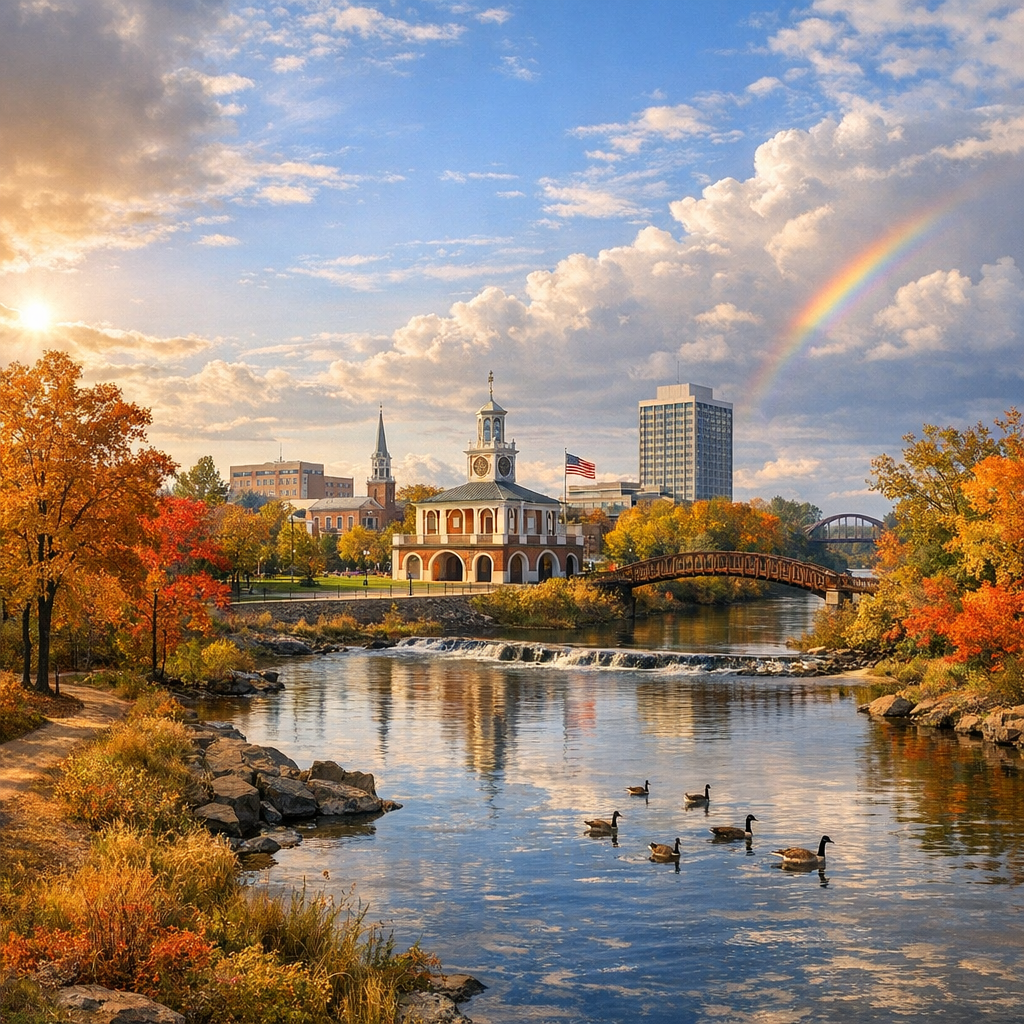
Fayetteville, North Carolina, experiences a humid subtropical climate, characterized by hot, humid summers and mild winters. This climate influences various aspects of daily life, from outdoor activities to agricultural practices.
Seasonal Weather Patterns
Throughout the year, Fayetteville’s temperatures fluctuate significantly. The hottest month is typically July, with average high temperatures around 90°F (32°C), while January is the coldest, averaging lows near 35°F (2°C). Precipitation is fairly evenly distributed, with August being the wettest month, averaging 5.10 inches (129.5 mm) of rainfall. Snowfall is rare but possible during winter months.
Environmental Initiatives
Several organizations in Fayetteville are dedicated to promoting environmental sustainability. Sustainable Sandhills focuses on areas such as energy resiliency, air and water quality, waste management, and local agriculture. Their programs aim to strengthen communities by creating resilient environmental, economic, and social resources for current and future generations.
Additionally, the City of Fayetteville’s Stormwater Management Program addresses issues related to stormwater runoff, which can carry pollutants into local rivers and streams. The program emphasizes the importance of managing stormwater to protect water quality and prevent flooding.
Community Involvement
Residents can participate in various initiatives to support environmental sustainability. Engaging in local recycling programs, supporting farmers’ markets, and participating in community clean-up events are effective ways to contribute. Staying informed about local environmental policies and initiatives further empowers residents to make a positive impact.
Understanding Fayetteville’s climate and participating in environmental initiatives are essential steps toward fostering a sustainable and resilient community.