

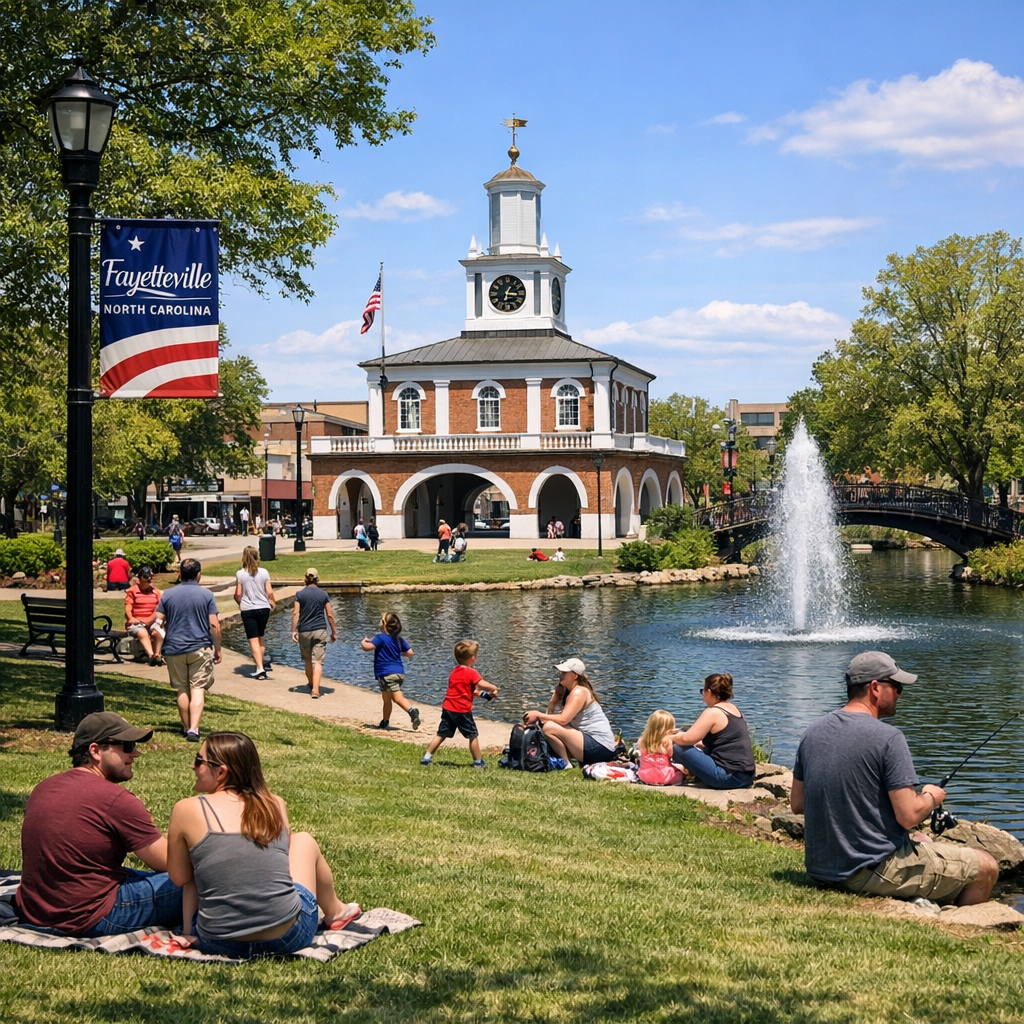
Fayetteville, North Carolina, experiences a humid subtropical climate, characterized by hot, humid summers and mild winters. This climate influences various aspects of daily life, from outdoor activities to agricultural practices.
Seasonal Weather Patterns
Throughout the year, Fayetteville’s temperatures and precipitation levels vary:
- Summer (June to August): Average high temperatures range from 87°F to 90°F, with July being the hottest month. These months also see the highest precipitation, averaging around 5 inches, often due to afternoon thunderstorms.
- Winter (December to February): Average high temperatures range from 54°F to 58°F, with January being the coldest month. Precipitation during these months averages around 3 inches.
- Spring and Fall: These transitional seasons offer moderate temperatures and varying precipitation levels, making them ideal for outdoor activities.
Environmental Initiatives
Fayetteville is proactive in addressing environmental challenges, particularly those related to stormwater management. The city’s Stormwater Management Program focuses on mitigating flooding and reducing pollution in local waterways. In May 2025, Fayetteville was awarded $910,000 from the North Carolina Department of Environmental Quality to enhance stormwater infrastructure near Eutaw Creek, aiming to prevent flooding in vulnerable neighborhoods.
Understanding Fayetteville’s climate and the city’s environmental efforts is essential for residents and visitors to make informed decisions and contribute to the community’s resilience.