

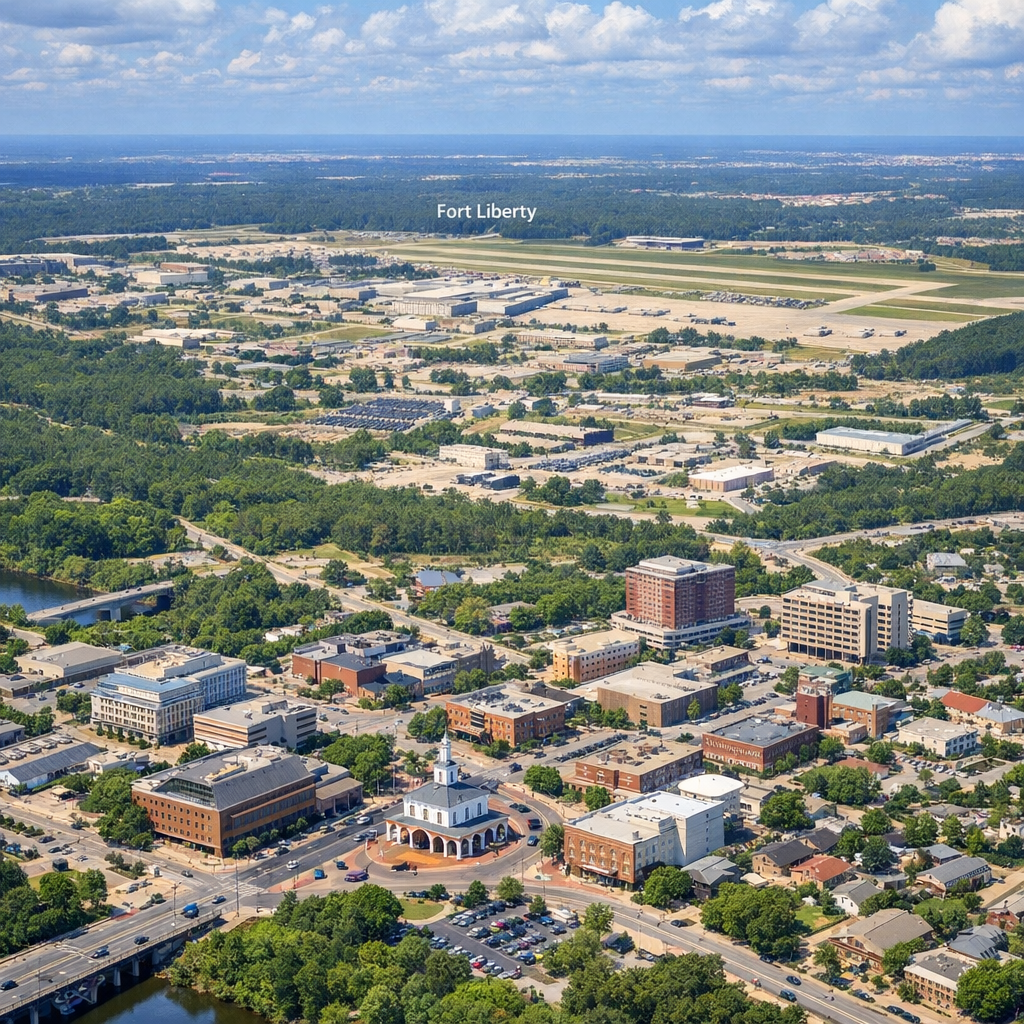
Fayetteville, North Carolina, has long been recognized for its strong ties to the military, with Fort Bragg (now Fort Liberty) serving as a cornerstone of the local economy. This relationship has fostered a unique economic landscape that is both resilient and adaptive to national economic trends and policies.
Military Influence and Economic Stability
Fort Liberty, the largest military installation by population in the world, significantly contributes to Fayetteville’s economic stability. The base supports over 50,000 active-duty personnel and 15,000 civilian employees, injecting approximately $4.5 billion annually into the region’s economy. This substantial federal presence provides a buffer against national economic downturns, as military funding often remains consistent even during periods of economic uncertainty.
Diversification Efforts
Recognizing the need for economic diversification, Fayetteville has actively pursued initiatives to attract various industries. The city has seen investments from major defense contractors such as Lockheed Martin, Boeing, and General Dynamics. Additionally, the presence of companies like Goodyear Tire and Rubber Company and the Cape Fear Valley Health System has broadened the economic base, reducing reliance on military-related income.
Infrastructure Investments
Infrastructure development has been a focal point for Fayetteville’s economic strategy. The Fayetteville Regional Airport, for instance, has undergone significant renovations and expansions, totaling around $60 million. These improvements aim to enhance connectivity and attract business travelers, further stimulating the local economy. Plans to introduce an international arrivals facility underscore the city’s commitment to becoming a regional economic hub.
Challenges and Community Response
Despite these efforts, Fayetteville faces challenges that mirror national issues. The city has implemented measures such as a youth curfew to address rising juvenile incidents, reflecting broader concerns about public safety and community well-being. Additionally, debates over developments like data centers highlight the community’s engagement with balancing economic growth and quality of life.
Conclusion
Fayetteville’s proactive approach to economic development, coupled with its strong military foundation, positions the city to navigate national economic fluctuations effectively. By continuing to invest in infrastructure, diversify its economic base, and address community concerns, Fayetteville exemplifies resilience and adaptability in the face of broader economic challenges.